
Richard Strauss
Der Rosenkavalier
Mar 24 – Apr 10

Price includes $10.00 fee
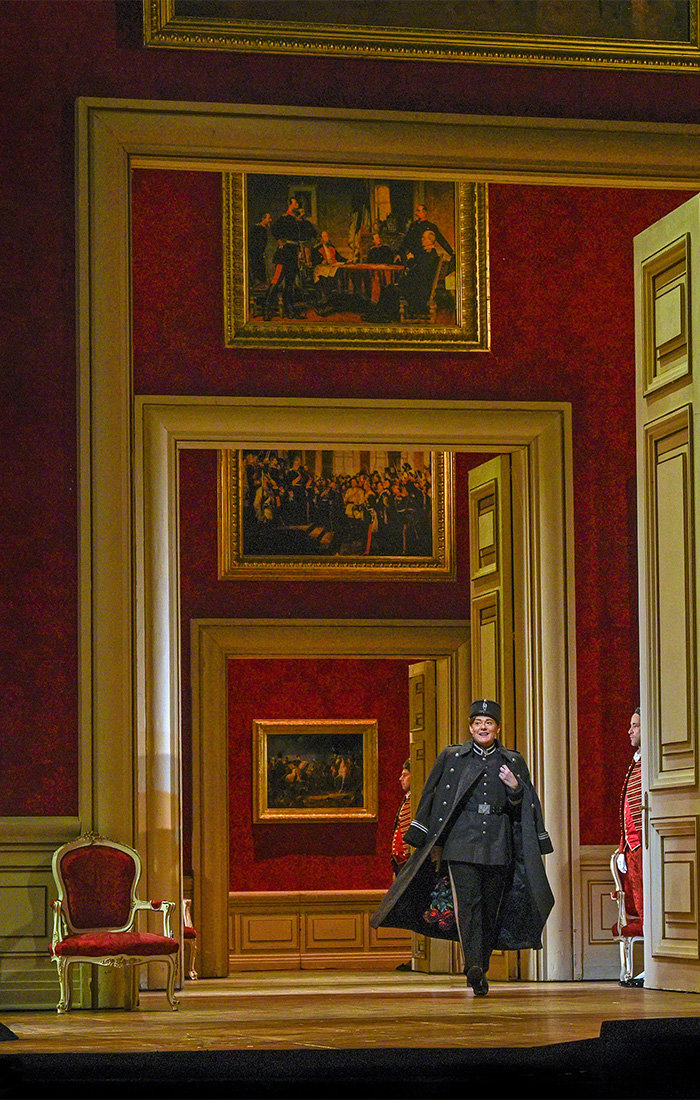
Music Director Yannick Nézet-Séguin takes the helm of Strauss’s most beloved score, following his acclaimed Met performances of the composer’s Elektra, Die Frau ohne Schatten, and Salome. After her “resplendent” (Observer) 2025 portrayal of Strauss’s Arabella, soprano Rachel Willis-Sørensen stars as the elegant Marschallin, alongside brilliant mezzo-soprano Emily D’Angelo as her impetuous younger lover, Octavian. Soprano Ying Fang is the lovely heiress who steals his heart, and bass Günther Groissböck reprises his uproarious portrayal of the bumptious Baron Ochs in Robert Carsen’s turn-of-the-century setting.
A co-production of the Metropolitan Opera; The Royal Opera, Covent Garden, London; Teatro Colón, Buenos Aires; and Teatro Regio di Torino
Production a gift of Howard Solomon and Sarah Billinghurst Solomon
This revival is part of the Met’s new In the Classic Style Fund with special thanks to C. Graham Berwind, III and the donors who have supported this initiative
Sung In
German
Met Titles In
- English
- German
- Spanish
Estimated Run Time
4 hrs 20 mins
House Opens
Act I
75 mins
Intermission
35 mins
Act II
60 mins
Intermission
30 mins
Acts III
60 mins
Opera Ends
Cast

Conductor
Yannick Nézet-Séguin
Performing
All Dates

Marschallin
Rachel Willis-Sørensen
Performing
All Dates

Sophie
Ying Fang
Performing
All Dates

Octavian
Emily D’Angelo
Performing
All Dates

Annina
Eve Gigliotti
Performing
All Dates

Italian Singer
Matthew Polenzani
Performing
All Dates

Valzacchi
Brenton Ryan
Performing
All Dates

Faninal
Brian Mulligan
Performing
All Dates

Baron Ochs
Günther Groissböck
Performing
All Dates

World premiere: Court Opera, Dresden, 1911. Set in an idealized Vienna of the past, Strauss’s most popular opera concerns a wise woman of the world who is involved with a much younger lover but ultimately forced to accept the laws of time, giving him up to a pretty young heiress. Hofmannsthal’s fascinating libretto deftly combines comedy, dreamy nostalgic fantasy, genuine human drama, and light but striking touches of philosophy and social commentary. Strauss’s magnificent score, likewise, works on several levels, combining the refinement of Mozart with the epic grandeur of Wagner.
Creators
Richard Strauss (1864–1949) composed an impressive body of orchestral works and songs before devoting the second half of his long and productive career to the stage. His 1909 opera Elektra marked his first collaboration with Viennese author and poet Hugo von Hofmannsthal (1874–1929), who would go on to write five other libretti for Strauss over the following 20 years, in one of the most remarkable partnerships in theater history.
-
composer
Richard Strauss
Production
Robert Carsen
SET DESIGNER
Paul Steinberg
COSTUME DESIGNER
Brigitte Reiffenstuel
LIGHTING DESIGNERs
Robert Carsen and Peter Van Praet
CHOREOGRAPHER
Philippe Giraudeau
C. Graham Berwind, III Chorus Director
Tilman Michael
Setting

The opera is originally set in Vienna in the 1740s. Genuine historical references are merged with fictitious inventions (like the “noble custom” of the presentation of the silver rose to a fiancée, which never actually existed) and anachronisms (like the Viennese Waltz, which did not yet exist at that time). It’s a mixture that creates a seductive mythical landscape, a ceremonious and impossibly beautiful Vienna-that-never-was. The Met’s current production moves the setting to the last years of the Habsburg Empire.
Music
The score of Der Rosenkavalier is lush, rich, and romantic to an extraordinary degree—perhaps surprisingly so, considering that the composer had written the disturbingly edgy and modern Elektra only two years earlier. The presentation of the rose, with its soaring vocal lines sprinkled with chromatic figures reflecting the shimmering of the silver rose (a motif that reappears with renewed poignancy at the very end) is ravishingly beautiful. And waltzes appear frequently, sometimes bumptious, sometimes elegant.

Share This Page
Social Share
Copied